BMI Calculator
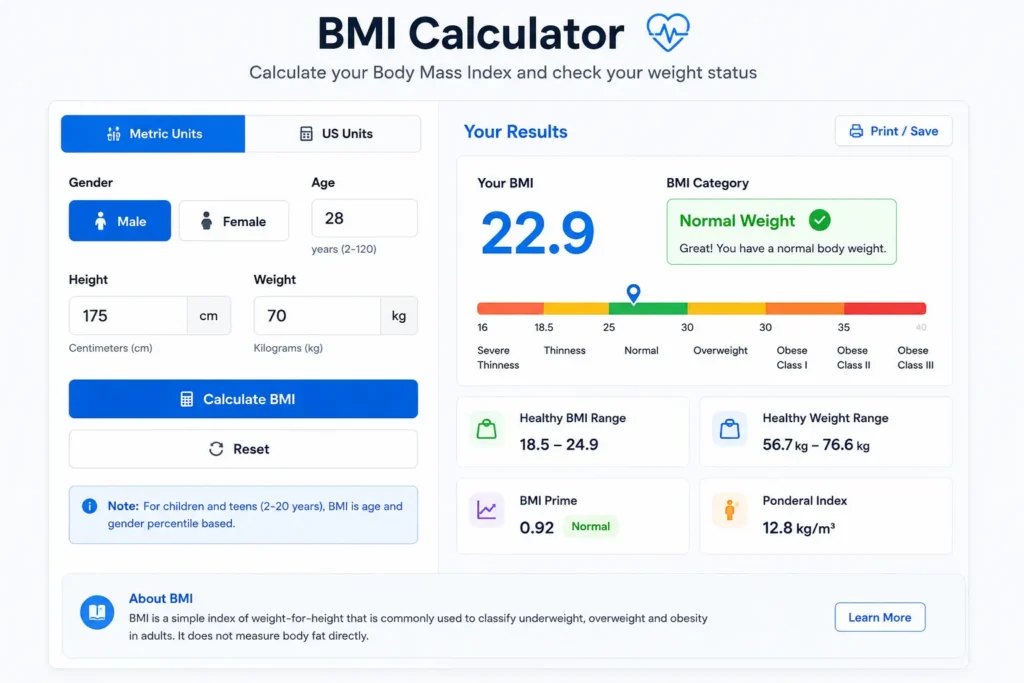
The Body Mass Index (BMI) Calculator is a simple tool that estimates whether your weight is appropriate for your height. It works by using your height and weight to calculate a BMI score and then places that score into a standard weight category. Many BMI calculators also consider age for additional guidance and can calculate the Ponderal Index for comparison.
You can use either Metric Units (centimeters, meters, kilograms) or Other Units (feet, inches, pounds). The calculator automatically converts measurements and displays your BMI instantly.
What Is BMI?
Body Mass Index (BMI) is a screening measurement used worldwide to estimate body weight in relation to height. Although it does not directly measure body fat, it provides a quick indication of whether a person may be underweight, at a healthy weight, overweight, or living with obesity.
Doctors, fitness professionals, and public health organizations commonly use BMI as an initial assessment tool. Because muscle mass, age, sex, and body composition differ between individuals, BMI should be viewed as a general guideline rather than a medical diagnosis.
Adult BMI Categories
The following ranges are commonly used for adults aged 20 years and older:
| Classification | BMI Range |
|---|---|
| Severe Thinness | Below 16 |
| Moderate Thinness | 16.0–16.9 |
| Mild Thinness | 17.0–18.4 |
| Healthy Weight | 18.5–24.9 |
| Overweight | 25.0–29.9 |
| Obesity Class I | 30.0–34.9 |
| Obesity Class II | 35.0–39.9 |
| Obesity Class III | 40 or higher |
BMI for Children and Teenagers
BMI is interpreted differently for people between the ages of 2 and 20. Instead of fixed BMI ranges, healthcare professionals compare BMI with growth charts and percentiles based on age and sex.
General categories include:
- Underweight: Below the 5th percentile
- Healthy Weight: 5th to below the 85th percentile
- Overweight: 85th to below the 95th percentile
- Obesity: 95th percentile or above
Health Risks of Excess Body Weight
Carrying too much body weight may increase the likelihood of developing:
- High blood pressure
- Type 2 diabetes
- Heart disease
- Stroke
- Sleep apnea
- High cholesterol
- Osteoarthritis
- Gallbladder disease
- Certain cancers
- Reduced mobility
- Lower quality of life
Maintaining a healthy BMI through balanced nutrition, regular physical activity, and healthy lifestyle habits may help lower these risks.
Health Risks of Being Underweight
A BMI below the healthy range may be associated with:
- Poor nutrition
- Vitamin and mineral deficiencies
- Reduced immune function
- Osteoporosis
- Muscle loss
- Fertility concerns
- Delayed growth in children and teens
- Increased recovery time after illness or surgery
Persistent low body weight should be discussed with a healthcare professional.
Limitations of BMI
Although BMI is useful for screening, it has several limitations.
It does not distinguish between muscle and body fat, meaning athletes and muscular individuals may have a high BMI despite having low body fat. Likewise, older adults may have a healthy BMI while carrying more body fat than younger adults.
BMI should be considered alongside other health indicators such as waist circumference, body fat percentage, lifestyle, and medical history.
BMI Formula
Metric Formula
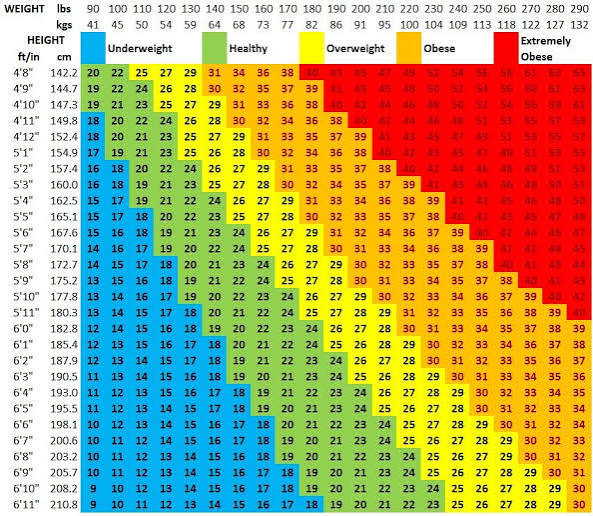
BMI = Weight (kg) ÷ Height² (m²)
US Formula
BMI = 703 × Weight (lb) ÷ Height² (in²)
BMI Prime
BMI Prime compares your BMI with the upper limit of the healthy BMI range (25).
BMI Prime = BMI ÷ 25
Interpretation:
- Less than 0.74 – Underweight
- 0.74–1.00 – Healthy
- 1.00–1.20 – Overweight
- Above 1.20 – Obesity
BMI Prime makes it easy to see how far your BMI is from the recommended healthy range.
Ponderal Index
The Ponderal Index (PI) is another body size measurement that uses height cubed rather than height squared. It is sometimes considered more suitable for very tall or very short individuals.
Metric Formula
PI = Weight (kg) ÷ Height³ (m³)
US Formula
PI = Height (in) ÷ ∛Weight (lb)
Like BMI, the Ponderal Index is intended as a screening tool rather than a medical diagnosis.